What Is an Air Fryer and How Does It Really Work? (Beginner’s Guide)
Air fryers have rapidly moved from “trendy gadget” to core kitchen appliance—especially for people who want healthier meals without sacrificing taste or convenience. Yet many beginners still misunderstand what an air fryer actually does, how it differs from other appliances, and whether it truly deserves a permanent place on the counter.
This guide breaks down how air fryers work, why they cook food differently, how they compare to ovens and grills, and who benefits most from using one.
What Is an Air Fryer?
An air fryer is a compact countertop appliance that cooks food using rapidly circulating hot air. Its purpose is to create a crispy, browned exterior similar to frying—without submerging food in oil. Despite the name, an air fryer does not fry food in the traditional sense. Instead, it uses a high-intensity convection cooking method, optimized for speed, crispness, and efficiency.
Key Characteristics of an Air Fryer
- Compact, enclosed cooking chamber
- High-powered heating element
- Strong internal fan for air circulation
- Perforated basket or tray for airflow
- Fast heat-up and short cooking times
Air fryers are designed to cook smaller portions efficiently, making them ideal for daily meals rather than large batch cooking.
How an Air Fryer Actually Works (Step by Step)
Understanding how an air fryer works explains why it produces different results than an oven.
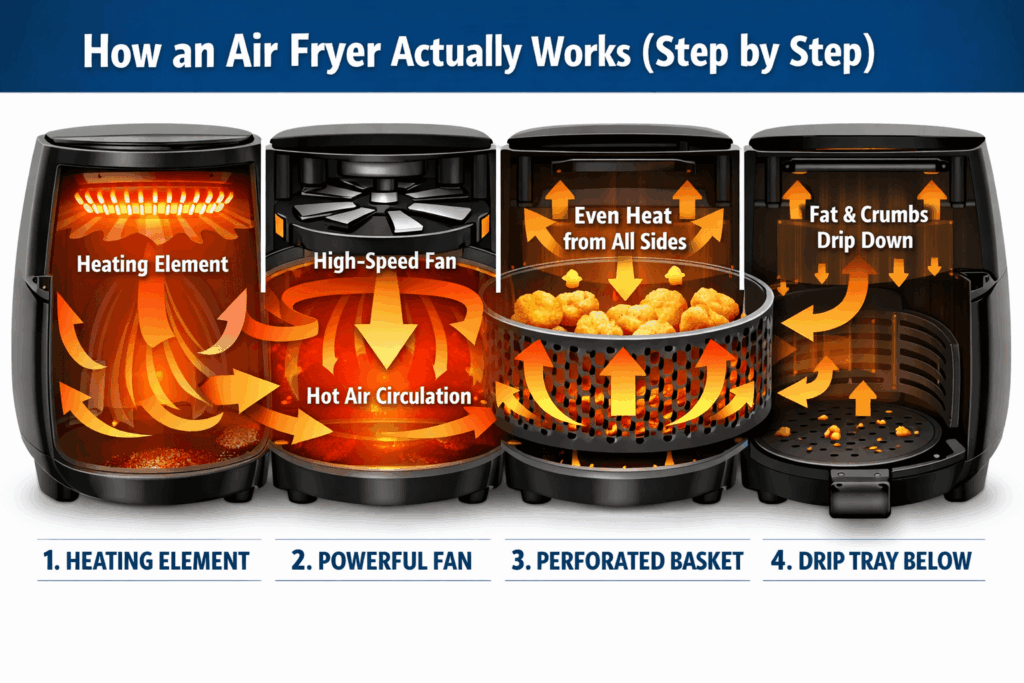
1. Rapid Heating
Unlike an oven, which heats a large cavity slowly, an air fryer heats a small enclosed space, reducing energy loss.
The heating element at the top of the appliance reaches high temperatures quickly—usually between 350°F and 400°F (175–205°C).
2. High-Speed Air Circulation
A powerful fan forces hot air to circulate rapidly around the food. This airflow:
- Removes surface moisture
- Ensures even heat distribution
- Accelerates browning
This is the defining feature of air frying.
3. Elevated Food Position
Food sits in a raised, perforated basket or rack, allowing hot air to reach all sides. Drippings fall away from the food instead of soaking back in.
4. Controlled Environment
Because the chamber is small and sealed:
- Temperature remains stable
- Cooking is more predictable
- Food cooks faster and more evenly.
This combination of heat, airflow, and positioning is what allows air fryers to mimic the texture of frying with minimal oil.
Why Food Gets Crispy in an Air Fryer Without Oil
Crispiness is often assumed to require oil—but that’s only partially true.
The Science Behind Crisp Texture
Crisp food results from:
- Moisture evaporation
- Surface dehydration
- The Maillard reaction (browning of proteins and sugars)
Air fryers excel at all three.
Because hot air moves quickly across the food’s surface, moisture evaporates faster than in an oven. Once humidity is gone, browning begins.
The Role of Oil (Optional, Not Mandatory)
A small amount of oil can:
- Improve browning
- Enhance flavor
- Promote even color
However, oil is not required for many foods—especially proteins and vegetables with natural fats.
This is why air frying often reduces oil use by 70–90% compared to deep frying.
Air Fryer vs Conventional Oven: What’s the Real Difference?
Air fryers are often described as “small convection ovens,” but the difference is more than size.

Speed and Efficiency
Air fryers:
- Preheat for 2–3 minutes
- Cook food faster due to concentrated heat
- Use less electricity for small meals
Ovens:
- Require long preheating
- Heat a large cavity regardless of portion size
Texture and Crispness
Air fryers:
- Produce stronger surface browning
- Remove moisture more effectively
- Deliver crisp results without flipping trays
Ovens:
- Excel at large dishes
- Struggle to crisp small portions without oil
When an Oven Is Still Better
- Large batch cooking
- Baking bread or desserts
- Roasting whole poultry
For everyday meals, air fryers offer speed and texture advantages that ovens cannot easily replicate.
Air Fryer vs Deep Fryer: Health and Practicality
This comparison explains why air fryers gained popularity so quickly.

Deep Frying
- Food absorbs large amounts of oil
- Oil degrades with repeated use
- High calorie density
- Messy and time-consuming
Air Frying
- Minimal or no added oil
- Lower calorie density
- Faster cleanup
- Less odor and splatter
From a health perspective, air frying significantly reduces:
- Excess fat intake
- Oxidized oils
- Post-meal heaviness
What Is an Air Grill? (And How It Differs From an Air Fryer)
Many modern appliances now include an air grill or grill + air fry functions, which can confuse beginners.
What Is an Air Grill?
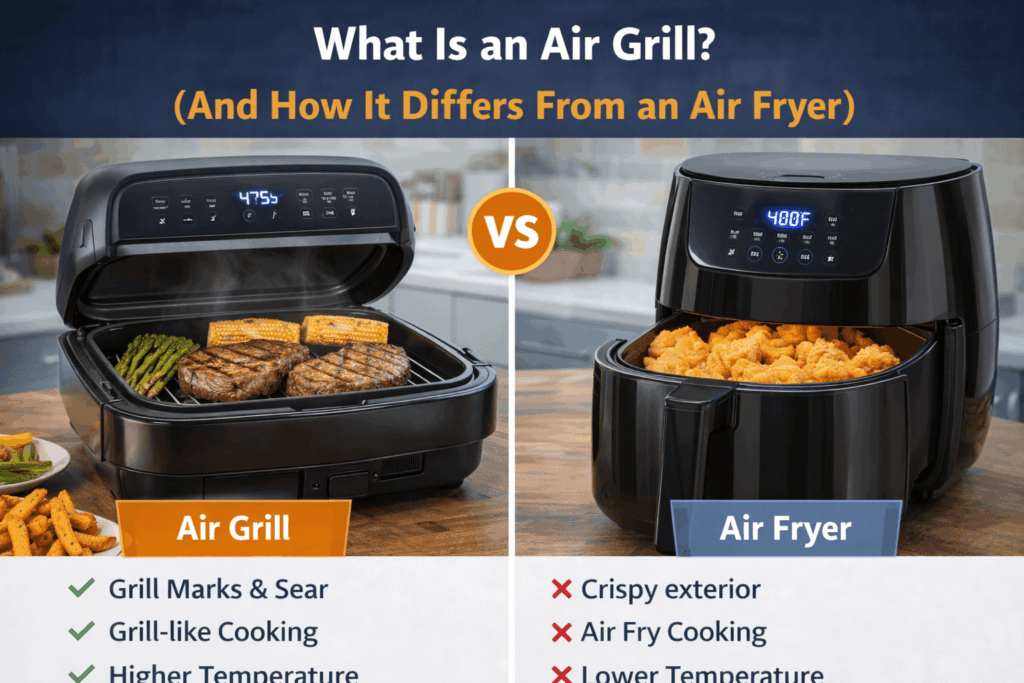
An air grill is a cooking function or appliance that combines:
- High heat from above or below
- Rapid air circulation
- Direct contact grilling surface (grill plate)
Some air fryers include a grill insert, while others are marketed as air fryer grills.
Key Differences Between Air Fryer and Air Grill
| Feature | Air Fryer | Air Grill |
| Primary heat | Hot circulating air | Direct grill heat + air |
| Best for | Crisping, roasting | Steaks, burgers, grill marks |
| Texture | Even, dry crisp | Charred, grilled surface |
| Oil use | Minimal | Minimal |
When an Air Grill Makes Sense
- Cooking steaks or chops indoors
- Creating grill marks without outdoor grilling
- High-protein meals like burgers and chicken breasts
Important Limitation
Air grills do not replace traditional grills for smoky flavor—but they offer convenience and year-round usability.
Who Benefits Most From Using an Air Fryer?
Air fryers are not one-size-fits-all, but they shine for specific lifestyles.
Busy Professionals
- Fast cooking
- Minimal cleanup
- Reliable results
Health-Focused Home Cooks
- Reduced oil
- Better portion control
- Consistent cooking temperatures
Beginners in the Kitchen
- Simple controls
- Short learning curve
- Fewer failed meals
Families Cooking Small Batches
- Quick dinners
- Kid-friendly foods
- Less energy waste
What an Air Fryer Is NOT
Understanding limitations prevents disappointment.
An air fryer is not:
- A deep fryer replacement for all recipes
- Ideal for huge portions
- Best for baking delicate pastries
- A magic solution for unhealthy food choices
It is a tool, not a shortcut around nutrition fundamentals.
Why Air Fryer Recipes Matter More Than the Appliance
Many first-time users blame the air fryer when meals fail—but the real issue is often improper recipes.
Air frying requires:
- Adjusted temperatures
- Shorter cooking times
- Correct food spacing
- Understanding moisture content
This is why air fryer–specific recipes outperform adapted oven recipes—especially for beginners.
👉 For readers who want tested cooking times, visual guidance, and nutrition-focused meals, this is precisely why The Ultimate Air Fryer Cookbook with Pictures was created—to remove guesswork and deliver consistent results.
Final Thoughts: Is an Air Fryer Worth It?
For everyday cooking, air fryers offer a rare combination of:
- Speed
- Convenience
- Texture
- Health-conscious preparation
They don’t replace every appliance—but for modern kitchens focused on efficiency and healthier meals, an air fryer earns its place.