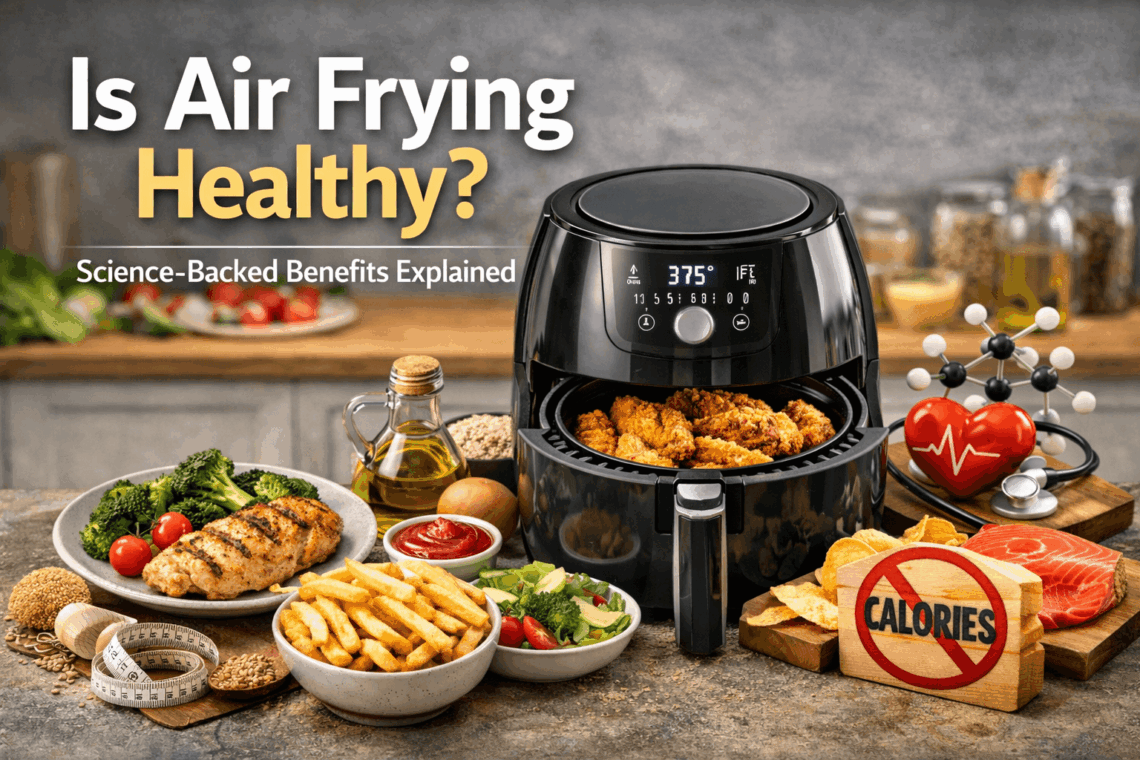
Is Air Frying Actually Healthy? Science-Backed Benefits Explained
When people first hear about air frying, the reaction is often mixed. Some are excited by the promise of crispy food with less oil. Others are skeptical — because anything that sounds too good in nutrition usually is.
If you’ve ever stood in your kitchen wondering whether buying or using an air fryer is actually a healthy choice, you’re not alone. Many of my readers ask the same question, often after years of trying different diets, cooking methods, or kitchen gadgets that didn’t live up to expectations. So let’s slow down and look at this honestly: is air frying actually healthy, or is it just a smarter version of junk food preparation?
Why the “Healthy Air Fryer” Claim Feels Suspicious
The word fryer alone raises red flags. For decades, frying has been associated with greasy meals, excess calories, and post-meal heaviness. When air fryers appeared, promising similar results without oil, it sounded almost like a loophole.
Social media didn’t help. One post claims air frying is “basically dieting.” Another says it’s no better than deep frying. The truth sits quietly between these extremes.
Air frying isn’t magic — but it does change the way food is cooked in ways that matter for health.
What Healthy Cooking Really Looks Like in Real Life
Healthy cooking isn’t about removing every gram of fat or counting every calorie. In real kitchens, health shows up as patterns:
- Cooking at home more often
- Using less oil without feeling deprived
- Making vegetables taste good enough to eat regularly
- Avoiding unnecessary processing
Cooking methods influence all of these. A method that makes food quicker, less messy, and more enjoyable tends to stick. And consistency, not perfection, is what improves health outcomes over time.
How Air Frying Changes the Cooking Experience
If you’ve ever watched food cook in an air fryer, you notice something immediately: it’s fast, and it’s dry. There’s no bubbling oil, no splatter, no lingering smell that sticks to your clothes.
Air fryers cook with intense, circulating heat, which quickly dries the surface of food. That’s why vegetables roast instead of being steamed, and why chicken browns instead of turning soggy.
If you want a deeper mechanical explanation, that’s covered step by step in Article 1: What Is an Air Fryer and How Does It Really Work?. But from a health perspective, what matters is this:
Less oil touches the food.
Less oil ends up in your body.
The Oil Question: Where the Biggest Health Difference Comes From
Oil is not the enemy, but excess oil sneaks in easily when frying.
Think about traditional deep frying. Food doesn’t just come into contact with oil; it absorbs it. Even pan frying often requires multiple tablespoons just to prevent sticking and encourage browning.
With air frying, the relationship with oil changes. You decide if and how much to use. Sometimes a light spray is enough. Other times — especially with lean proteins — a teaspoon improves texture and flavor. That difference alone can quietly remove hundreds of calories per week from a standard home diet, without any conscious restriction.
Calories: What Actually Changes (and What Doesn’t)
Air frying doesn’t remove calories from food. What it removes is unnecessary fat added during cooking.
For example, a chicken breast cooked in an air fryer still contains the same protein. What it doesn’t include is oil trapped in the coating or absorbed into the surface.
That said, air frying doesn’t excuse oversized portions or heavy sauces. A bowl of air-fried fries eaten mindlessly is still a bowl of fries. What air frying does well is lower the baseline — so everyday meals start from a healthier place.
Harmful Compounds: The Part People Rarely Talk About
One of the less visible benefits of air frying has nothing to do with calories.
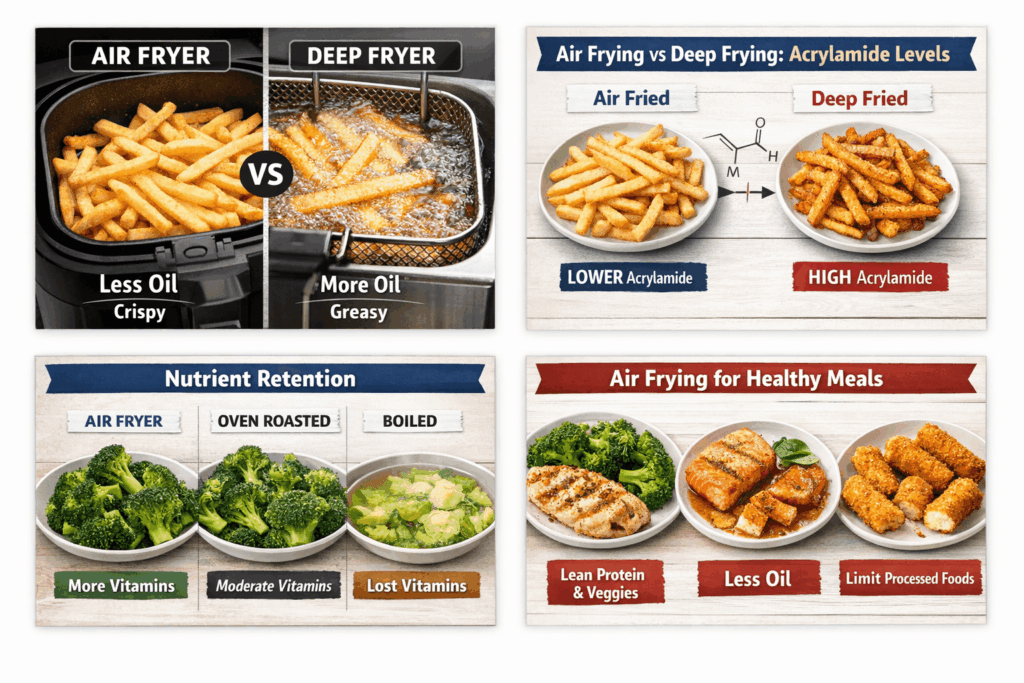
High-temperature oil frying can create unwanted compounds, especially when oils are reused or overheated. Acrylamide, for example, forms more readily in deep-fried starchy foods.
Air frying tends to reduce this risk because:
- There’s little or no oil to degrade
- Cooking times are shorter
- Temperatures are more controlled
This doesn’t make air frying “detoxifying,” but it does make it a gentler option compared to traditional frying.
Nutrients and Cooking Time: Why Speed Matters
Long cooking times are often worse for nutrients than heat itself.
Air fryers work quickly. Vegetables like broccoli and Brussels sprouts spend less time exposed to heat, helping preserve vitamins that are sensitive to prolonged cooking.
Compared to boiling (where nutrients leach into water) or long roasting sessions, air frying often strikes a better balance between texture and nutrition.
Heart Health: The Quiet Advantage
Heart health isn’t about eliminating fat—it’s about type and amount.
Air frying naturally reduces saturated fat intake when it replaces deep-frying or pan-frying. It also avoids the repeated reheating of oils, which can lead to oxidation.
For people cooking for families or aging parents, this matters more than it sounds. Small daily reductions in unhealthy fats add up over the years.
Weight Loss: Why Air Fryers Help Indirectly
Air fryers don’t cause weight loss. People do.
But air fryers remove friction from healthier habits. Meals are faster. Cleanup is easier. Results are predictable. That means fewer last-minute takeout decisions and fewer “I don’t feel like cooking” nights.
In real life, that consistency often matters more than calorie precision.
Air Frying and Blood Sugar Control
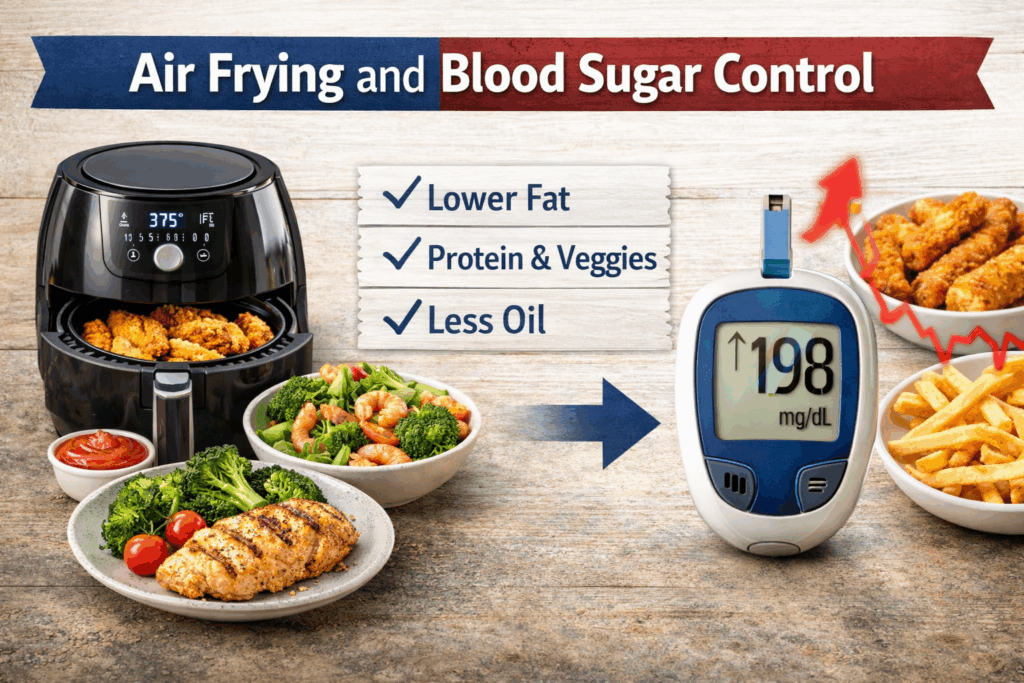
Cooking method doesn’t change carbohydrates into something else — but it influences meal composition.
Air fryers make protein-focused meals easier to prepare, which helps balance blood sugar responses. They also encourage roasting vegetables instead of boiling or breading them.
For people managing insulin resistance or diabetes, this kind of structure supports better outcomes — without feeling restrictive.
When Air Frying Is Not a Healthy Choice
Air frying has limits, and pretending otherwise does more harm than good.
It doesn’t:
- Turn processed food into whole food
- Eliminate sugar or refined carbs
- Replace thoughtful meal planning
Even when eaten daily, frozen snacks remain frozen.
Health comes from what you cook most often — not just how.
Comparing Cooking Methods Honestly
Compared to deep frying, air frying is clearly healthier.
Compared to oven cooking, it’s often more efficient and produces better texture with less fat.
Compared to pan frying, it usually requires less oil and less attention.
This is why air frying works so well as an everyday method, even if it’s not used for every recipe.
How to Make Air Frying as Healthy as Possible
The healthiest air-fried meals tend to follow simple principles:
- Focus on whole foods
- Use oil intentionally, not automatically
- Avoid excessive breading
- Don’t overcook
This is also where recipe quality matters. Air fryers behave differently from ovens, and poorly adapted recipes lead to dry, disappointing results.
That’s why air-fryer-specific recipes — tested for timing, spacing, and moisture — make such a difference. This approach is precisely how The Ultimate Air Fryer Cookbook with Pictures was designed: realistic portions, minimal oil, and clear visual guidance so healthy cooking actually feels enjoyable.
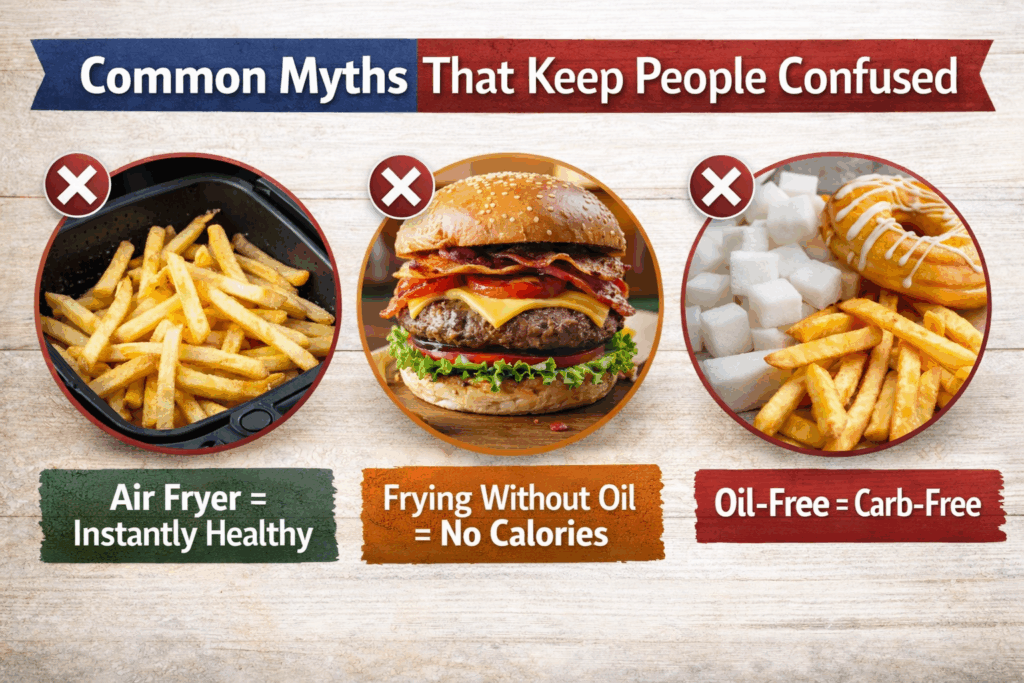
Common Myths That Keep People Confused
Air frying doesn’t make everything healthy—but it makes healthy cooking easier.
It doesn’t remove the need to think about nutrition—but it reduces friction.
And it’s not a trend—it’s a tool that fits modern, busy lives surprisingly well.
Final Verdict: Is Air Frying Actually Healthy?
Air frying isn’t a shortcut to health—but it is a meaningful improvement over traditional frying.
It supports:
- Lower fat intake
- Better nutrient preservation
- More consistent home cooking
When used thoughtfully, it becomes part of a sustainable, realistic way of eating—not a gimmick.
Frequently Asked Questions
Is air frying actually healthier than deep frying?
In most cases, yes. Air frying typically uses little or no oil, so food absorbs far less fat and calories than when it’s deep fried. It also avoids repeatedly heating large amounts of oil, which can break down and form unwanted compounds over time.
Does air frying reduce calories?
Air frying can reduce calories compared to deep frying because much less oil is used during cooking. The food itself doesn’t lose calories—what changes is the amount of added fat from the cooking process.
Is air frying healthier than baking in the oven?
Often yes, especially for small portions. Air fryers cook food faster and circulate hot air more intensely, which helps create crisp texture with less oil. For large meals or batch cooking, ovens can be just as healthy when minimal fat is used.
Does air frying create harmful compounds like acrylamide?
Acrylamide can form in starchy foods cooked at high temperatures, but studies commonly show that air frying produces less acrylamide than deep frying. Results depend on cooking time and temperature, so avoiding over-browning is important.
Do you need oil in an air fryer?
Not always. Many foods cook well without any added oil, especially proteins and foods with natural fat. A light spray or small amount of oil can improve browning and flavor, but it’s usually far less than traditional frying methods.
Is air frying good for weight loss?
Air frying can support weight loss by making lower-oil meals easier to prepare at home. The biggest benefit is practical—quick cooking and easy cleanup help people cook more often and rely less on takeout or fried foods.
Is air frying safe to use every day?
Yes, for most people it’s safe for daily use when done correctly. Avoid burning food, follow temperature guidelines, and focus on whole or minimally processed foods rather than relying heavily on packaged snacks.
What foods are healthiest to cook in an air fryer?
Whole foods tend to be the healthiest options. Vegetables like broccoli and Brussels sprouts, lean proteins such as chicken, fish, or turkey, and simple sides like sweet potatoes benefit most from air frying without heavy breading or excess oil.