Protein Myths, Busted (By Someone Who Actually Looked at the Research)
Protein has had a strange year.
Scroll through any nutrition content online and you’ll find protein bars, protein coffee, protein ice cream, and entire accounts dedicated to convincing you that you’re not getting nearly enough of it. The targets keep climbing. The anxiety keeps climbing with them.
So I want to do something a little different here. Not another list of high-protein recipes — just a calm, honest look at what the research actually says, versus what the algorithm has been telling you.
Let’s go through it.
Myth 1: You need far more protein than you think
This is the big one, and it’s everywhere. Some corners of social media suggest targets of 1.5–2 grams of protein per kilogram of body weight, every single day, no exceptions, as if anything less puts you at risk.
For most people living a normal, moderately active life, that’s considerably more than necessary. A reasonable everyday target for most adults sits closer to 0.8–1.2 grams per kilogram of body weight. The higher end of that range fits people who are strength training seriously, recovering from an injury, or significantly increasing their activity. If you went for a regular walk today, you almost certainly don’t need a protein shake afterward.
This matters because the constant pressure to eat “more, more, more” protein can crowd out other things your body needs just as much — fibre, healthy fats, the simple pleasure of a meal that isn’t built around a macro target.
Myth 2: Plant protein is “incomplete” and inferior
This idea has been around for decades, and it’s outdated.
It’s true that individual plant foods often contain lower amounts of one or two specific amino acids compared to animal sources. But here’s what that older framing missed: you’re not eating in isolation, meal by meal, amino acid by amino acid. Across a normal day of varied meals, plant-based eaters reliably get everything they need without obsessively pairing specific foods at every single sitting.
Beans, lentils, tofu, tempeh, and whole grains — eaten across a day, in reasonable variety — do the job. You don’t need to mentally calculate amino acid combinations at lunch. Your body is better at this than the old advice gave it credit for.
Myth 3: You must eat protein within 30 minutes of exercising
The “anabolic window” is one of those ideas that sounded so precise and scientific that it stuck around long after the research moved on.
What actually matters most is your total protein intake across the full day, not whether you hit a narrow post-workout deadline. If you eat a meal containing protein within a few hours of training, you’re entirely fine. The window is real, but it’s measured in hours, not minutes — and for most people doing moderate exercise, it barely matters at all.
This myth causes more stress than it’s worth. Nobody needs to be checking the clock between the gym and the fridge.
Myth 4: More protein always means more muscle
Protein is genuinely necessary for muscle repair and growth — that part is true. But it isn’t sufficient on its own, and this is the part that gets left out of a lot of marketing.
Without resistance training and adequate overall calories, extra protein mostly gets used for energy or, beyond a certain point, simply excreted. Eating six eggs for breakfast doesn’t build muscle by itself. Lifting weights consistently, recovering properly, and eating enough protein to support that effort — that combination builds muscle. Protein is one ingredient in a process, not a shortcut around it.
So what actually matters?
Hitting a reasonable protein target across your day — and you genuinely don’t need to track every gram to do this.
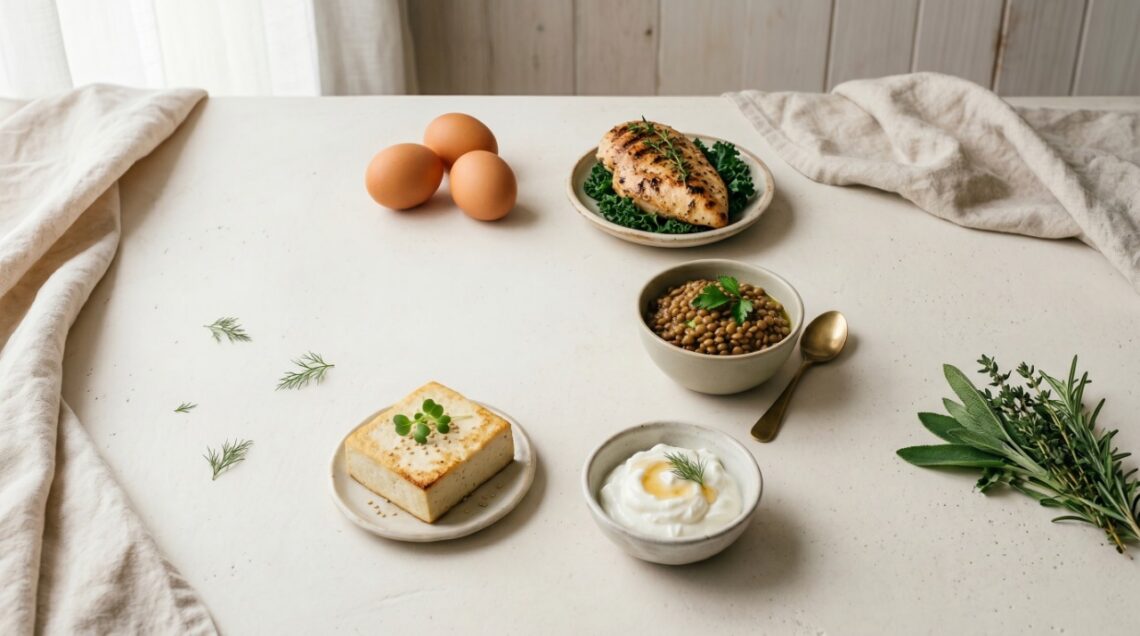
A simple, sustainable approach: aim for a palm-sized portion of protein at most meals. Eggs, chicken, fish, tofu, beans, lentils, Greek yoghurt — any combination, in any order, eaten with the rest of your meal rather than as a separate project.
Consistency across the week matters far more than precision at any single meal. You don’t fail at protein by having a lower-protein breakfast one day. You succeed at it by generally, reliably, including good sources across most of your meals over time.
My honest take
I know nutrition content online can feel like it’s constantly shifting the goalposts. One year it’s fat. Then carbs. Now it’s protein’s turn to be the thing you’re apparently not getting enough of.
My honest professional opinion: most of us are overthinking protein and underthinking sleep, stress, and simply enjoying our food without measuring it against a target first. Protein matters — it’s not a myth that it matters. But it doesn’t require the anxiety that’s been built up around it.
If you’ve been worrying about whether you’re “doing protein right,” I hope this helped you put that worry down, at least a little.
A few easy ways to include more protein, without overthinking it
- Add a tin of beans or lentils to soups, stews, or pasta sauces — they blend in easily and barely change the flavour
- Keep boiled eggs in the fridge for an easy add to salads, toast, or a quick snack
- Choose Greek yoghurt over regular yoghurt for breakfast or a snack — same routine, more protein, no extra effort
- Add tofu or tempeh to a stir-fry the same way you’d add chicken — same method, different protein source
- Don’t worry about pairing plant proteins perfectly at every meal — variety across the week is what counts
If you have a specific question about protein, nutrition labels, or anything else in this space, I’d love to hear it — leave a comment below or find me on Instagram @jennifernesh.eats. I read every message, and there’s a good chance your question becomes the next article.
For more nutrition made simple, and recipes that make all of this easier in practice, you’ll find everything at jnesh.com.
Healthy meals, made easy. That’s the promise. 🌿
— Jennifer
This article is for general nutrition education and isn’t a substitute for personalised advice from a registered dietitian or healthcare provider, especially if you have specific medical or athletic performance needs.